 I know that many people come to this website looking for answers to these questions:
- Will a salt rinse cure gingivitis?
- What about brushing my teeth with baking soda?
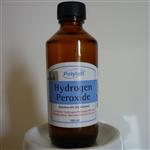
- Can I rinse my mouth with Hydrogen Peroxide?
- And what about vinegar?
I answer these questions in this article.
There are many many many reports on the internet suggesting that you can use one or a combination of these elements to treat gingivitis and other mouth ailments.
Some reports suggest that you can use salt daily as a toothpaste. The same suggestions are made about baking soda. Others suggest a baking soda and hydrogen peroxide mix.
On the other hand some experts say that using salt or baking soda daily to brush your teeth is a bad idea because you risk accidentally swallowing too much salt. Too much salt can harden the arteries and cause heart disease. Okay but can it be as bad or more risky than swallowing your toxic toothpaste who’s label reads: Do Not Swallow?
Why and How is Salt or Baking Soda and Hydrogen Peroxide Good for the Mouth?
The modern use of these elements for oral hygiene is known as the Keyes Technique and it was developed in the late 70’s and early 80’s by Dr Paul H Keyes.
According to Dr Keyes all of the mechanical methods of oral hygiene (brushing, picking, flossing, rinsing, irrigation) go some way to eliminating the causes of plaque (and plaque causes gingivitis). But these methods alone are inadequate. In addition to a mechanical cleaning action, an antibacterial agent is required.
Your mouth is contaminated with bacteria. You can’t avoid this so you have to deal with it. If you don’t adequately decontaminate gingivitis will occur.
All of these Natural Ingredients Are Antibacterial
According to Dr Keyes all of the following ingredients will kill on contact what he calls motile microorganisms.1
- salt (sodium chloride)
- baking soda (sodium bicarbonate)
- glycerin2
- vinegar
- cranberry juice (unsweetened)
In addition to killing bacteria, baking soda neutralizes the acids that enable plaque to develop.
Salt is not as strong a bacterial agent as baking soda and it requires a high concentration. But salt reduces inflammation and stimulates the gum.
Another ingredient that Dr Keyes favors is hydrogen peroxide because its foaming action helps to remove the bacteria from teeth and gingivital crevices.
You should not use hydrogen peroxide if you have amalgam fillings. Hydrogen peroxide causes the mercury in amalgam fillings to leach out. This article explains the problem in more depth and includes references. And this article explains why you should get rid of any amalgam fillings that you do have!
Vinegar? Cranberry Juice? Neutrogena Soap!!? Clorox!!!??
In addition to killing bacteria vinegar and cranberry juice will help dissolve tartar (harden plaque). But cranberry juice is very acidic and should not be used every day and he recommends rinsing after using it.
Two other ingredients that Dr Keyes recommends is Neutrogena soap and a weak solution of Clorox. But there is no way I would put these two toxic elements in my mouth. Toothpaste with six toxic ingredients is bad enough.
So when you find homemade toothpaste recipes that include salt, baking soda, glycerin,3 and hydrogen peroxide you’ll know that these ideas and recommendations originated from an expert and highly trained dental professional and his conclusions are backed by his research. On the other hand some experts dispute the efficacy of the Keyes Technique.
OraMD tastes better than hydrogen peroxide and it works!
And Now for My Sister’s Experience
When my sister recently told me that she had to have a major tooth pulled and that now she had an infection and lots of pain and the dentist wouldn’t give her an antibiotic, I suggested a recipe from page 325 of the book Alternative Cures: More than 1,000 of the Most Effective Natural Home Remedies
My sister doesn’t have an irrigator but she made the concentrated solution as described in that book and and she also later added to the solution a few drops of the OraMD that I sent to her.
Three things happened. The pain and infection went away without the need for antibiotics.
But more than that, her gums stopped hurting. She didn’t tell me about the problem she had with her gums. But apparently she had gingivitis. She tells me her gums feel great and they look pink and healthy.
And the third thing that happened is that her teeth became very white…probably from the hydrogen peroxide.
She rinsed her mouth every day, twice a day with the concentrated solution until the major infection was gone. Now she uses the mixture occasionally to keep her teeth bright. But she uses OraMD all the time.
So if you have any doubts about whether or not you can cure gingivitis, I hope my Sister’s story encourages you to take action. It is possible to save your teeth.
Take action. Try OraMd it is simpler than the Keyes method. You can carry it in your pocket or purse. It is no more expensive than toxic toothpaste and it just works. It’s a gingivitis killer.
- Motile means mobile so a motile microorganism is one that moves about. ↩
- Evidence is emerging that glycerin prevents the natural re-enameling of teeth and should not be used as an ingredient in toothpaste. ↩
- I would use only vegetable based glycerin. ↩
- I would publish the recipe here but I am afraid I will infringe copyright. ↩



← Previous Comments
Thank you for your article. I have struggles with gum issues for years and nothing the dentists have prescribed has actually worked. May I please have a copy of your recipe so I can give it a go? Thank you in advance!
Hello Abigail
I sent you the recipe.
If your gingivitis is not caused by poor oral hygiene, consider nutritional deficiencies.
Vitamin C in particular is very important for gum health.
And if you are anaemic.
Rose
Could I have a copy of the recipe.
Grace
The recipe is also on its way to you.
Rose
Could I have a copy of the recipe. Thank you. I really need it.
Hello Iris
The recipe should be in your inbox.
Rose
Can I get the recipe for the mixture for gingivtis
Hello Marilyn
The recipe is on its way to you.
Rose
Hi Rose! If you have the time I would really appreciate the recipe for my mother who has had gum problems for many years now.
Hello Diana
Recipe is on its way to you.
Rose
Hi Rose
Would you be so kindly, and send your recipe to me. I’m a male age 55. In the past 5 year I have problem with gingivitis. I really hope your recipe can help.
Best regards,
Torben Pedersen
Denmark
Torben
My abject apologies for the delay.
The recipe has been sent to you.
Rose
I’ve just started using a more natural real salt on my “gums” and it seems like it may work better at pain reduction than the cheap low quality salt.
Years ago had a “lower small tooth broken half way across”, and brushed it inside with salt and was in major pain later that day.Not sure why that was ,as the real salt “on the gums” seems to mostly reduce pain.
A nerve got inflamed on my face a few times and caused severe facial,head,tmj jaw pain and burning.The only thing that reduced the pain was mixing cayenne pepper into Vicks vapor rub and spreading over my whole head,jaw,face.
Hello Tr
I sent you the recipe.
Sea salt is best.
Rose
Please sent me the recipe.
The dentist scrapped my gums and I have been in amazing pain went back the put me on MI paste I was living on ibuprofen.
Please send me recipe.
Thank Kim
Hello Kim
Apologies for the late reply.
The recipe has been sent to you.
But I hope by now you’ve found some relief.
Rose
Hello Rose, I’m so gladI came across your article. I would really appreciate it if you’d be so kind as to send me the recipe. Thank-you in advance, Maria.
Hello Maria
The recipe is on its way to you.
Rose
Hi Rose,
Will appreciate if you can send the recipe to me too. Great effort sending to all individually.
Thanks in Advance.
Hello Arthur
I sent the recipe to you.
Thanks for the encouragement.
Rose
Can i try using your recipe? Tnx
Hello Jen
Recipe should be in your inbox.
Rose
If you could send me a copy of the recipe I’d appreciate it!
Thank you so much.
Hello Jennifer
The recipe has been sent!
Rose
would you so kindly send me the recipe?
Yes. On its way.
Rose
me too please. thanx
Hello Margrit
The recipe has been sent!
Rose
Hello Rose! I’m very interested in the recipe if you could email it to me please. I’m going to invest in the OraMD and the book aswell! I’m so happy I came across this website ^ . ^
Jacqueline
The recipe is on its way to you.
Let me know how the OraMD works for you.
I love it.
Rose
Hi there, could I get a copy of the recipe?
Yes Barry!
The recipe is on its way to you.
Rose
Thanks you so much for this article,please send me the recipes to use.
Peter
The recipe is on its way to you.
Rose
Hi there,
Could I please have the formula too?
Cheers!
Hello Sarah
The formula has been sent to you.
Rose
Hello, would it be possible if you could send me the recipe for this? Thank you!
Hello Suzanne.
It is possible!
The recipe has been sent to you.
Rose
I would like to have the recipe also. Thanks in advance.
Hello Pamela
The recipe has been sent to you!
Rose
I have tried everything I have read on line and gotten no solution. Please send me your recipe. I want to keep my teeth and have healthy gums.
Thank you.
Hello Charlotte
The recipe is on its way to you.
Rose
I would love recipe as well.
This gum problem is making my teeth bleed and causing bad breath.
Hello Ebby
I sent the recipe to you.
I hope you will consider seeing a dentist if you haven’t already done that.
Rose
Thanks for the great information. I would love to have your recipe.
Thank you!
Hello Izzy
The recipe is on its way to you.
Sorry for the late reply.
I’ve been traveling.
Rose
I would appreciate if you could send me the recipe also.thanks Randy
Hello Randy
An apology to you too for this late reply.
The recipe has been sent to you.
Rose
I had a dental implant put in a week ago, and my gums around the area are inflamed, possibly infected. Can I please have a copy of the recipe?
Hello Karen
The recipe is on its way to you.
I hope it is just “inflammation”
and not an infection.
You might try drinking a strong black tea.
It has astringent properties that help heal.
Rose
I’d love the recipe, have a terrible infection
Jessica
The recipe has been sent to you!
Rose
Hi rose can i pls have the recipe thank you so much in advance.
Hello Lyn
I sent the recipe to you today.
Rose
Hi,
Could i have your recipe pls?
Thnx
Hello Rumana
The recipe is on its way to you!
Rose
Could I please have a copy of the recipe….I need to increase my gums
Hello Mk
I sent the recipe to you!
Rose
Hi an i have the recipe pls? i put my email here, thanks a lot, blessings from mexico 🙂
Hello Robert
The recipe is on its way to you.
Rose
Please send me the recipe. Thank you!
Hello Yevette
I sent the recipe to you.
Rose
Hi Rose,
Great article. Im 25 and Ive been dealing with receding gums on my lower molar teeth and the ones right before them, as well as my lower canines. Theyve been like that for a few years (I dont have dental insurance so Ive been looking to remedy this as naturally as possible). I noticed my originally pink gums have become purple around the teeth margins a few months ago. Could you please send me the recipe? Im hoping to get my gums back to pink and in healthier shape.
Shar
I know you said you don’t have dental insurance but at least see a dentist for an initial diagnosis.
Many dentists offer the initial exam at a very low price.
You are too young to lose your teeth and you will if you do not get the problem under control.
I will send you the recipe but I strongly strongly recommend you see a dentist.
Rose
Could I get the recipe too please?
Hello John
The recipe has been sent to you!
Rose
Hello there, is there any way I can get the recipe too? Thank you so much
Hello Norma
The recipe is on its way to you!
Rose
Hi,
I’ve been searching and searching online for a good recipe and stumbled upon this article, which may be my gum-saver. Can you please send me your recipe?
Abby
Hello Abby
The recipe is on its way.
Sorry for the delay.
Rose
Can you please send me the recipe too.
thanks in advance.
Thomas
Apologies for the delay.
Recipe is on its way to you.
Rose
Hello, thank you for your article. May I please get a copy of the recipe, too? Thank you!
Hello Raven
Recipe is flying to your inbox.
Rose
I would love a copy of the recipe. Many thanks!
Hello Karen
The recipe has been sent today.
Rose
May I please have the recipe thanks
Daniel Robbins
Dan
Apologies to you too for the late reply.
Recipe is on its way to you.
Rose
Hello! My husband is suffering from gum disease and is afraid to go to a dentist. He fears the cost and the discomfort. Do you think this recipe for toothpaste will help?
Hello Lisa
Recipe has been sent.
Sorry for the delay!
Rose
Hello there, is there any way I can get the recipe too? Thank you so much
Yes Deutsch
Another apology for the late reply.
Recipe has been sent to you.
Rose
Can i please have a copy to try. Thank-you
Sam
Hello Sam
Apologies to you too!
Recipe has been sent
Rose
my gums neeeeeeeddddd help. please send the recipe?
Sorry Charlene
I missed seeing about a dozen requests for the recipe.
It has been sent today.
Rose
Hello, could I get the recipe too please?
Hello Paul
The recipe is on its way to you.
Rose
Could you send me the recipe too? Thank you.
Hello Christine
Sorry for the late reply.
Recipe has been sent to you.
Rose